
Best for
Missing teeth, failing teeth, loose dentures, difficulty chewing, smile concerns, or patients looking for a more stable tooth replacement option.
Dental Implants in Charlotte
Dental implants can help restore the look, feel, and function of missing teeth with a solution designed to work with your smile, bite, and long-term oral health. At Barrero Dental Boutique, implant care is approached with careful planning, clear communication, and a calm experience from the first conversation through restoration and maintenance.
Quick scan
For patients who want the essentials first, dental implants are used to replace one tooth, several teeth, or a full arch of teeth with support from the jawbone.
Missing teeth, failing teeth, loose dentures, difficulty chewing, smile concerns, or patients looking for a more stable tooth replacement option.
Single implants, implant-supported bridges, full-arch implant restorations, removable implant-supported options, and coordinated surgical-restorative treatment.
Detailed evaluation, 3D planning when appropriate, thoughtful treatment sequencing, comfort-focused care, and restorations designed to support both function and appearance.
Not every patient is ready for implants immediately. Bone health, gum health, medical history, bite, aesthetics, and long-term maintenance all influence the treatment plan.
Dental implants may be worth exploring if missing or failing teeth are affecting your comfort, confidence, or ability to enjoy daily life.
The first step is an evaluation. BDB can help you understand whether implants are appropriate now, whether preparation is needed first, and what options make the most sense for your goals.
Implant treatment is not one-size-fits-all. The right option depends on how many teeth are missing, the condition of the surrounding teeth and bone, your goals, and the type of restoration that will best support your bite and smile.
A single implant can replace one missing tooth without relying on neighboring teeth for support. This option may be recommended when the surrounding teeth are healthy and the implant site is appropriate.
When several teeth are missing in the same area, implants may be used to support a bridge. This can provide a stable replacement while reducing the need to involve every missing tooth space individually.
For patients missing most or all teeth in an upper or lower arch, implants may support a full-arch restoration. In select cases, a temporary restoration may be placed the same day as surgery, depending on the plan.
Implants can also be used to improve the stability of a removable denture. This may be a helpful option for patients who want better support but are not pursuing a fixed full-arch restoration.
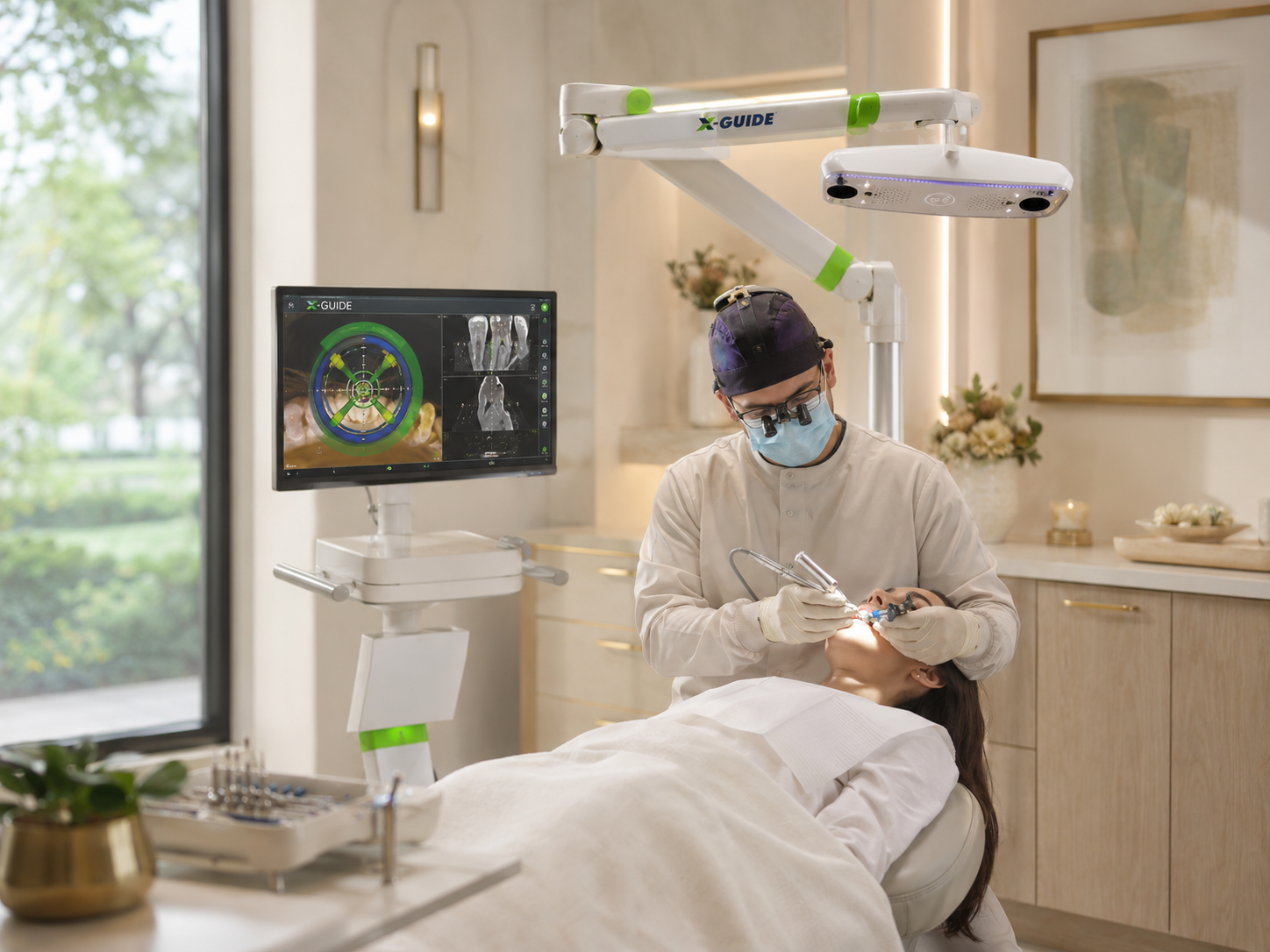
Digital imaging and guided planning can help the team evaluate bone, anatomy, implant position, and restorative goals before treatment begins.
When appropriate, microscope-enhanced techniques may support a more precise and conservative surgical approach. The goal is to place implants carefully while respecting the surrounding tissues.
Dental implants involve more than placing a post. These sections explain the planning, options, and restorative decisions that shape an implant experience.
A single dental implant is designed to replace the root structure of a missing tooth and support a custom restoration above the gumline. When the surrounding teeth are healthy, this can be an appealing option because it does not require reshaping neighboring teeth the way some traditional bridges do. The team will evaluate the space, bone support, bite, gum health, and aesthetic needs before recommending this approach.
When multiple teeth are missing in one area, an implant-supported bridge may provide stability and function without placing an implant for every missing tooth. The exact design depends on the number of missing teeth, the available bone, the bite, and the restorative plan. BDB will walk through the options so patients understand the tradeoffs between stability, aesthetics, maintenance, and investment.
Patients who are missing most or all teeth in an upper or lower arch may have options beyond a traditional denture. Full-arch implant restorations use a planned number of implants to support a larger restoration. Some patients may qualify for a temporary restoration the same day as surgery, but this depends on the patient's anatomy, implant stability, health history, and treatment plan. BDB does not present same-day teeth as a universal promise.
Implant-supported dentures may help patients who struggle with movement, sore spots, or reduced confidence with a traditional denture. Depending on the design, the denture may still be removable but feel more secure during everyday use. This can be a practical middle path for patients who want added stability without pursuing a fixed full-arch restoration.
Dental implants require thoughtful planning because the final restoration, bite, bone, gum tissue, and surrounding anatomy all matter. Digital imaging and guided planning can help the team evaluate implant position before surgery and plan the angle, depth, and location with the final tooth in mind. When appropriate, this technology supports a more informed and coordinated treatment experience.
Microscope-enhanced techniques may allow the dentist to work with greater visibility and precision during select implant procedures. When clinically appropriate, a conservative surgical approach can help protect surrounding tissues and support a calmer recovery experience. The recommendation depends on the treatment plan and the patient's specific anatomy.
Implant treatment is a significant decision. Patients deserve a team that can explain the process clearly, coordinate the surgical and restorative details, and design a plan around both health and appearance.
Implants are not only a surgical procedure. They are also a restorative and aesthetic decision. BDB plans with the final smile, bite, and long-term function in mind.
The team takes time to explain options, answer questions, and help patients understand what can be done now, what may need preparation, and what the long-term plan involves.
For patients who feel nervous about implant treatment, BDB can discuss comfort options and sedation considerations when clinically appropriate.
Digital imaging and guided planning may be used to evaluate anatomy, implant position, and restoration needs before treatment begins.
When appropriate, BDB can coordinate the evaluation, planning, placement, restoration, and maintenance of implant treatment within a familiar practice environment.
The goal is not only to replace teeth, but to help patients care for their implants, gums, restorations, and overall oral health over time.
What to expect
Implant care is a process. BDB's approach is designed to help you understand each step before moving forward.
The team listens to your concerns, goals, dental history, and what you want to change about your smile or bite.
Your dentist evaluates your teeth, gums, bite, bone support, existing restorations, and any areas of infection, damage, or tooth loss.
BDB reviews whether implants are appropriate, whether preparatory care may be needed, and which replacement option fits your health, timeline, and goals.
When treatment moves forward, the implant is placed according to the plan. Healing time varies depending on the patient, procedure, and whether additional treatment is involved.
Once ready, the implant is restored with a crown, bridge, denture, or full-arch restoration. Long-term care includes hygiene visits, home care, and periodic evaluation.
Dental implant treatment depends on careful evaluation before treatment and consistent care after restoration.
Before recommending implant treatment, the team may consider bone volume, gum health, bite forces, medical history, medications, smoking history, previous dental work, and aesthetic goals. Some patients may need preparatory care such as periodontal therapy, extraction planning, bone grafting, or treatment of existing infection before implants are placed.
Implants still require care. Patients should continue regular hygiene visits, clean carefully around implant restorations, and report any changes such as soreness, looseness, swelling, or difficulty chewing. Maintenance helps protect both the implant restoration and the tissues that support it.
Questions
Not always. Dental implants depend on bone support, gum health, medical history, medications, bite forces, and the overall treatment plan. An evaluation helps determine whether implants are appropriate or whether preparation is needed first.
Many patients missing most or all teeth may have implant-supported options, including removable or fixed full-arch restorations. The right option depends on anatomy, health, goals, budget, and long-term maintenance needs.
Some treatment plans may allow a temporary restoration to be placed the same day, but this is not appropriate for every patient. It depends on the procedure, implant stability, bone support, and the dentist's clinical evaluation.
Traditional dentures rest on the gums and are removable. Dental implants are placed in the jawbone and can support crowns, bridges, or dentures. Implant-supported options may feel more stable for many patients, but the best choice depends on the individual plan.
A traditional bridge usually relies on neighboring teeth for support. An implant replaces the missing tooth root and supports a restoration from the implant site. The team will explain which option best fits the condition of your surrounding teeth, bite, and long-term goals.
The team uses appropriate anesthesia and can discuss comfort options based on your needs and treatment plan. Some soreness or swelling may occur after implant surgery, and recovery varies by patient and procedure.
Timing varies. Some cases are completed in stages over several months, especially when healing, grafting, or complex restorative work is involved. BDB will outline the expected timeline before treatment begins.
Implants should be cared for with consistent home hygiene and regular professional maintenance. While implants cannot get cavities, the surrounding gums, bone, and restoration still need ongoing care.
Let the team know. BDB can walk you through the process, discuss comfort options, and explain whether sedation may be appropriate for your appointment.
Cost depends on the number of implants, the type of restoration, imaging, preparatory treatment, sedation needs, and maintenance plan. BDB can review fees after evaluating your needs and treatment options.
Next step
Whether you are missing one tooth, struggling with dentures, or considering a larger smile reconstruction, Barrero Dental Boutique can help you understand your options and plan the next step with confidence.